Pro Packing Tips
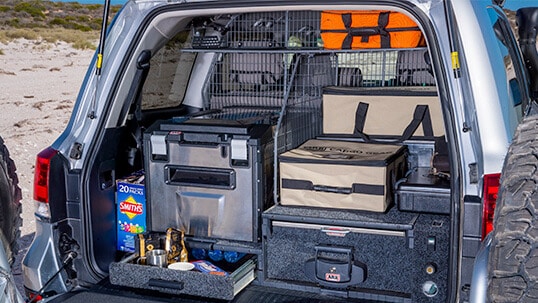
Organizing the essential items in your 4WD is akin to playing a game of Tetris, demanding strategic thinking and patience to ensure efficient packing and the safety of all passengers during travel. By approaching the task with a well-thought-out plan, you not only save time but also avoid the hassle of disarray when packing up at the campsite.
DISTRIBUTE THE WEIGHT
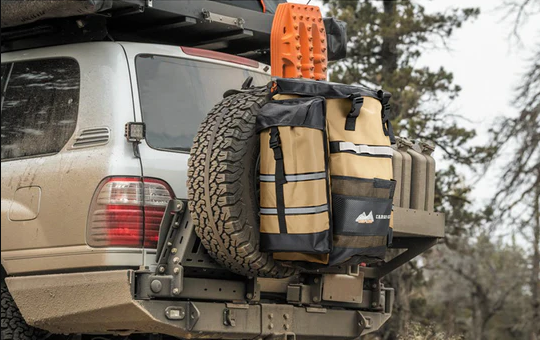
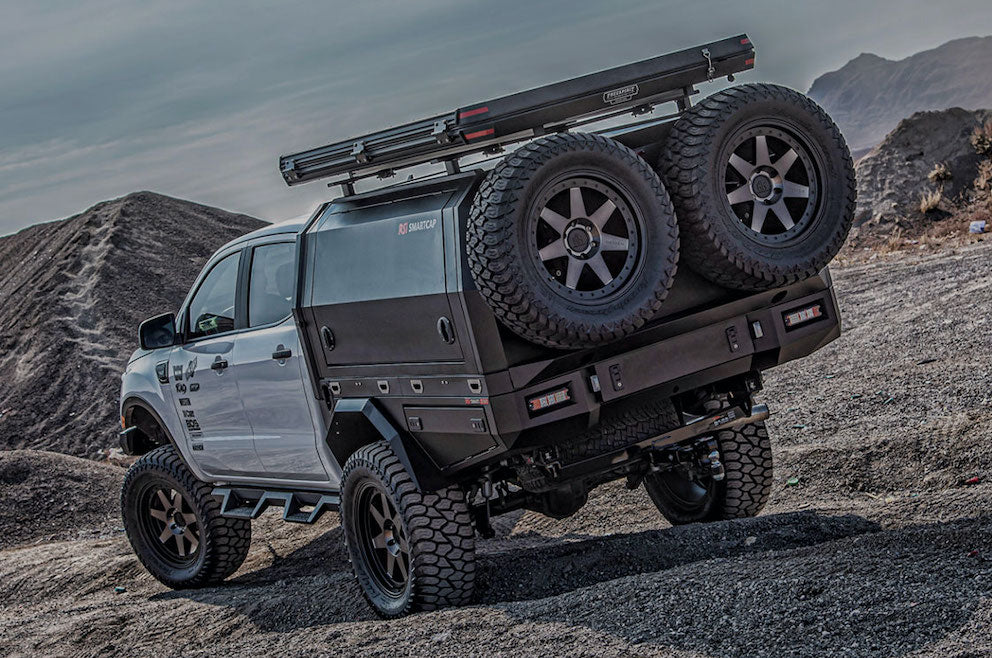
We understand the allure of impulsively throwing everything in and embarking on a journey, but such a hasty decision could result in a highly precarious scenario, particularly when navigating uneven terrain. By evenly distributing the weight of your belongings, you significantly enhance the safety of your trip, minimizing the risk of harming your car’s chassis, differential, and brakes, while also reducing the strain imposed on these components.
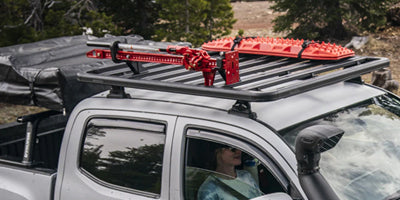
INSTALL A ROOF RACK
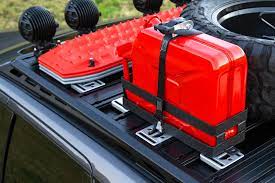
By incorporating roof racks into your vehicle, you immediately enhance your cargo-carrying capacity by effectively doubling the available space for accommodating cumbersome items like swags, eskys, and camp chairs.
INSTALL A CANOPY
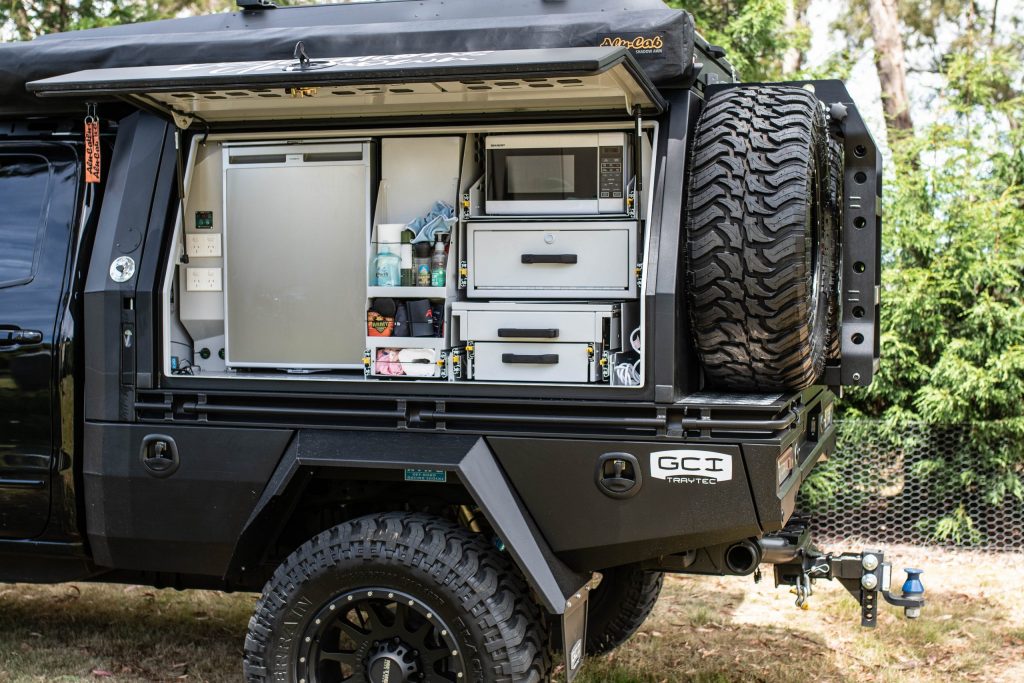
By adding a canopy to your utes tray, you effectively increase the overall storage capacity of your vehicle, enabling optimal utilization. This protective cover guarantees the safety and organization of your camping equipment by shielding it from various weather conditions. Additionally, it offers extra space inside the vehicle, allowing more room for the occupant
DONT OVERLOAD YOUR VEHICLE
The Gross Vehicle Mass (GVM) of your vehicle represents the utmost weight it can bear, encompassing both its own weight and the load it carries. Exceeding this limit by overloading your vehicle not only poses a risk of damaging its chassis but also violates the law. To ensure your safety, it is advisable to visit a local weigh bridge when your vehicle is fully loaded, providing you with the certainty of staying within the permissible limits.
ITEMS YOU NEED FIRST SHOULD BE EASILY ACCESSIBLE
Utilizing crates or easily detachable boxes significantly simplifies the process by allowing for faster packing and unpacking without the need to rearrange numerous smaller items.
PUT HEAVY GEAR DOWN LOW
Maintaining a good center of gravity is crucial, which entails not only placing lightweight items on top of heavier gear but also ensuring that any heavy objects are positioned as low as possible.
CARRY FUEL OUTSIDE YOUR 4X4
Carrying fuel inside your vehicle is not ideal. Diesel seems to be ok, but if you can avoid it, don’t carry it inside your car.
DONT TAKE WHAT YOU MIGHT NOT USE
I’m certain that all of you have experienced the error of overpacking. Just because you anticipate using an item doesn’t necessarily make it wise to bring along! If you don’t plan on using it frequently, it’s best to leave it at home, unless you have ample space and weight capacity available.
Certain individuals opt to leave behind items that serve only one purpose, as the greater the versatility of your equipment, the lesser the need for constant loading and unloading at each stop!
SECURE YOUR ITEMS
Engaging in 4WDing challenges your capacity to effectively secure and fasten your belongings. Even while inside a vehicle, minor collisions and jolts have the potential to launch your equipment into the air. Thus, it is vital to have a reliable method of securing everything, ensuring their preservation and preventing any harm to your vehicle. Unfortunately, our old Land Cruiser suffered extensive damage to its roof liner due to the previous owner’s apparent negligence in properly tying down items.
Moreover, the consequences of not properly securing your possessions can be catastrophic in the event of a severe accident, a scenario nobody wishes to confront.
FIND THE NOOKS AND CRANNIES
We have developed a knack for locating and utilizing the often overlooked nooks and crannies within our vehicle and canopy, where most individuals wouldn’t typically think to store items. These spaces, such as the concealed area beneath the false floor in your canopy or the rear jack compartment, provide ample room for storing infrequently needed gear. Within these compartments, we keep various essentials like radiator hoses, vee belts, emergency repair materials, as well as miscellaneous items like rags and odds and ends, ensuring we are prepared for unforeseen circumstances.
YOU CANT FIT EVERYTHING
If you’ve ever packed a 4WD for a significant journey, you’re well aware that it’s physically unfeasible to carry an extensive amount of gear due to limited space. However, in addition to the spatial constraints, exceeding the permissible weight limit is also against the law. It’s imperative to adhere to the Gross Vehicle Mass (GVM) regulations, as it is remarkably effortless to surpass the limit. Being in such a predicament means your vehicle is technically unlawful, and in the unfortunate event of an accident, you may encounter serious repercussions with both insurance coverage and legal consequences.
When it comes to packing your 4WD, above all else, the key is to practice repeatedly, as it is through practice that perfection is achieved. The more you pack your vehicle, the easier and more time-efficient the process will become.
PRO PACKING TIPS





OUR LATEST BLOGS

Ryco Filters
Before we delve into the benefits of RYCO air filters, let’s first understand why air filters are essential for your 4×4 vehicle. The primary function of an…
Bendix Brakes Guide
The answer’s in the name. While OEM brakes are sufficient for normal usage, they become less reliable as more and more weight is added. The closer your vehic…
Penrite Oil
Penrite has a long history of involvement in Australia motorsport, covering automotive, motorcycle, kart and boat racing. It’s involvement with Australia’s m…
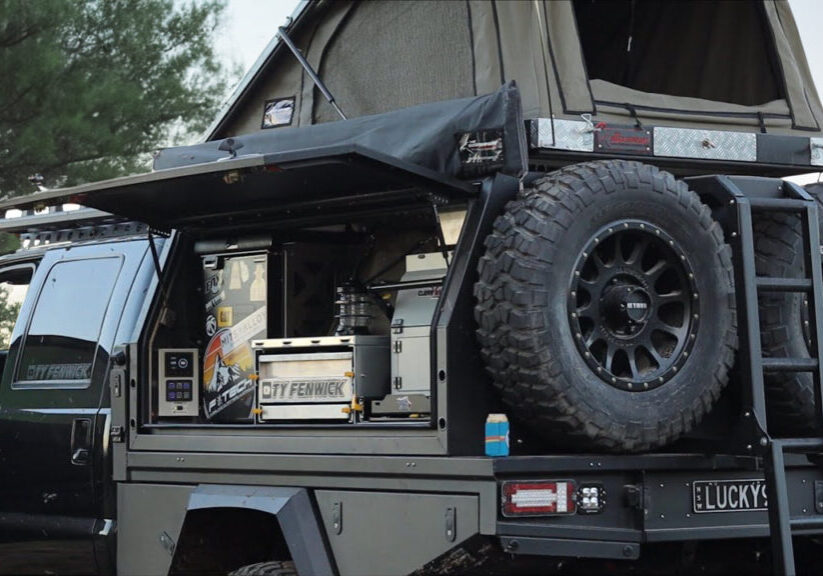
How to Maximise Your 4WD Storage Space
Knowing the vehicle’s roof-load limit and the carrying capacity of the roof rack system is crucial when packing gear onto a roof rack.