Towing Tips 4×4
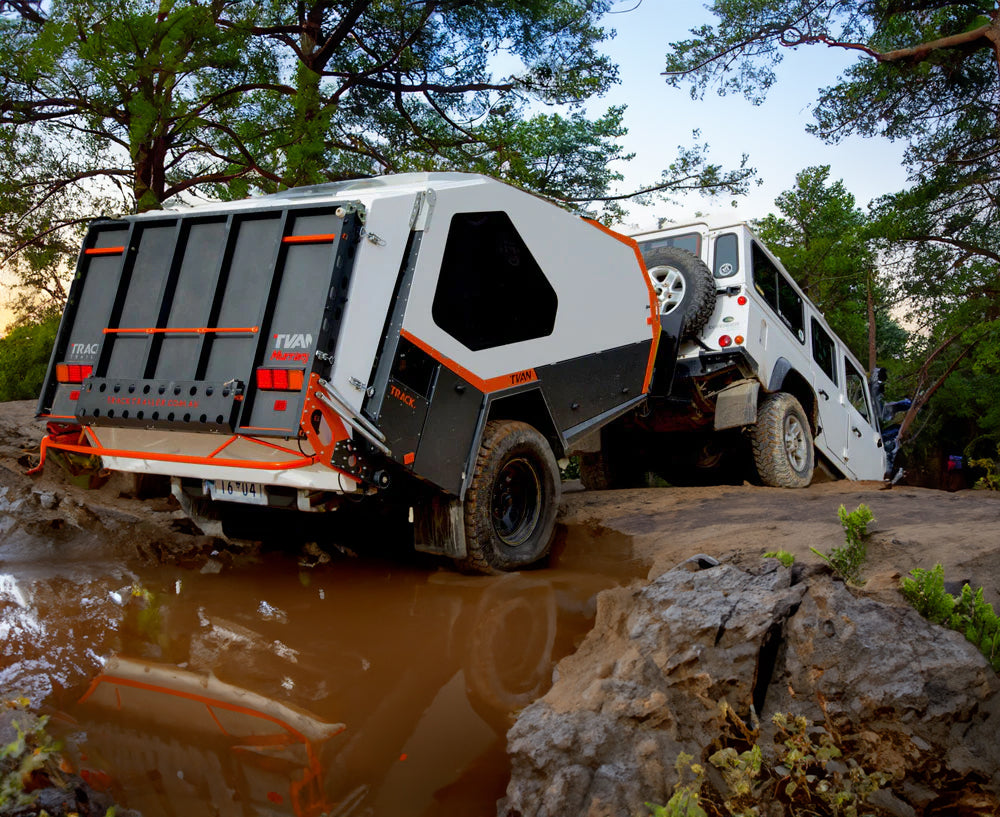
Whether you embark on a cross-country trek with your family or venture alone, equipped with a portable home attached to the rear of your vehicle, the experience is truly incomparable. It grants you the unique opportunity to truly discover the wonders of this vast land, immersing yourself in its diverse landscapes and iconic marvels, all without the need to fret about cutting your journey short, arranging accommodations, or setting up a shelter.
Nevertheless, irrespective of your level of expertise, towing a caravan entails much more complexity than simply connecting it to a standard tow ball and speeding off to your vacation spot. It necessitates a capable 4WD vehicle that is specifically designed to handle all your towing needs and journey requirements. Additionally, a thorough comprehension of the rules, regulations, safety measures, and initial setup procedures related to towing is crucial.
Without any more delay, let’s jump straight into the essential top tips and tricks for towing a caravan. To begin, we start off with a couple of helpful suggestions to make the hitching process nearly effortless.
EQUIP YOUR 4X4 WITH A REVERSE CAMERA
Reversing your 4×4 to connect your caravan, regardless of your experience level, can prove to be a challenging task, even with guidance. Even a slight misalignment requires repeating the process multiple times until it is safely and correctly connected.
This is where a reverse camera becomes invaluable.
Thankfully, the majority of newer vehicles are equipped with built-in reverse cameras. Some even have additional features like reversing guidelines and sensors that provide precise information about the angle and distance between your 4×4 and the caravan hitch.
However, for older models, there are various permanent and portable solutions available to simplify the reversing process. It is important to note that permanent solutions require professional installation by a licensed automotive accessories specialist.
Reverse cameras contribute significantly to safety, especially when traveling with children in a caravan. They effectively help mitigate risks associated with the pinch point, or crush zone, between the tow ball and drawbar.
TOWING MIRRORS
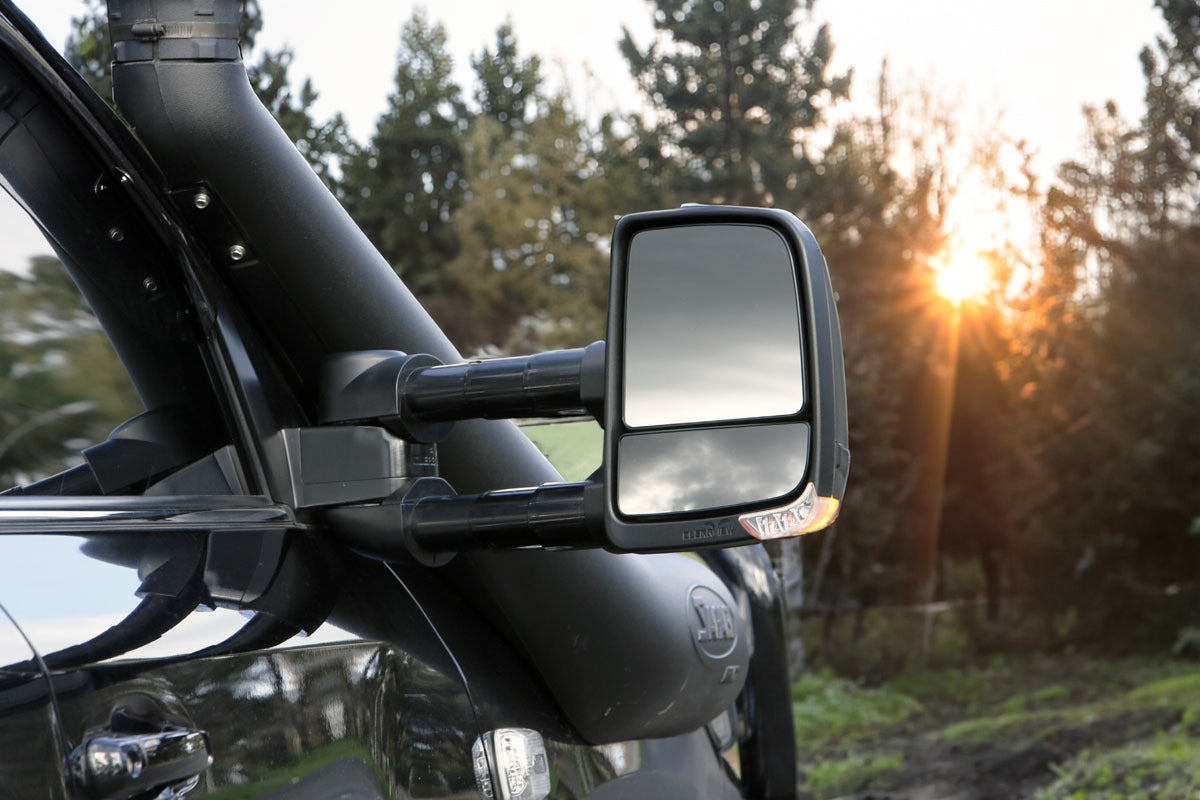
Safety is of utmost importance, and it goes without saying that having a clear view of the road ahead is crucial. It is essential to be aware of your surroundings to ensure the safety of your family and the caravan itself. To achieve this, using a towing mirror becomes necessary.
One significant concern is the presence of blind spots, as side mirrors on most vehicles have limited visibility. By using towing mirrors, you can minimize these blind spots and enhance your overall field of vision.
Moreover, towing can be a stressful task, but with the assistance of a towing mirror, it instills a sense of confidence by providing a comprehensive view of what lies behind your vehicle.
Additionally, adhering to legal requirements is essential for both safety and legal purposes. When towing a large trailer, it is mandatory to have the correct towing mirrors in place.
HAVE A PROCESS
After successfully maneuvering your 4×4 in reverse towards your caravan, it’s time to establish a connection between the two.
Attaching your caravan to your 4×4 is usually a simple task. However, unfavorable weather conditions or a sense of urgency to resume your journey can increase the likelihood of errors or incorrect linkages.
Step 1: Securely attach your hitch and place the cap on top.
Step 2: Cross your chains by connecting the left chain to the right point on your 4WD and the right chain to the left point. This creates a protective cradle or safety net that will catch the hitch if it becomes detached.
Step 3: Connect the electronics for your brake controller and brakelights.
Step 4: Attach the brake safety mechanism.
Step 5: Release the handbrake on your caravan.
Step 6: Remove the jockey wheel.
Step 7: Take away any wheel chocks.
Check that all the legs of your caravan are raised, ensure every chock is stored properly, close and secure all windows and storage containers, pack away the awning, and lastly, double-check all your connections before hitting the road
GET A BRAKE CONTROLLER
Ensure that if you own a caravan and carry a heavy load, you have properly installed an electronic brake controller on your vehicle. It is now a legal requirement for all caravans and trailers weighing more than 2000kg. However, it is crucial to select a reliable brake controller and familiarize yourself with its operation.
Curious about the function of an electronic brake controller? Essentially, it enables you to engage the brakes on your caravan simultaneously with your 4×4 vehicle. This synchronization ensures that when you apply the brakes to decelerate or prevent a collision, your caravan will slow down at the same rate, providing better control and enhancing overall safety.
The second you press it you should feel your caravan’s brakes activating and force your 4×4 to slow down.
A GOOD QUALITY TOWBAR
When it comes to towing a caravan, the towbar itself is of utmost importance. It serves as the essential component that enables camping or touring adventures to take place. Therefore, it is crucial to invest in a high-quality towbar.
But how can you identify a good towbar? What factors should you take into account?
Primarily, you must ensure that your towbar is sturdy, dependable, and offers optimal vehicle clearance for off-road usage. Regrettably, a large portion of towbars available in the market fail to fulfill these three requirements, let alone one or two of them.
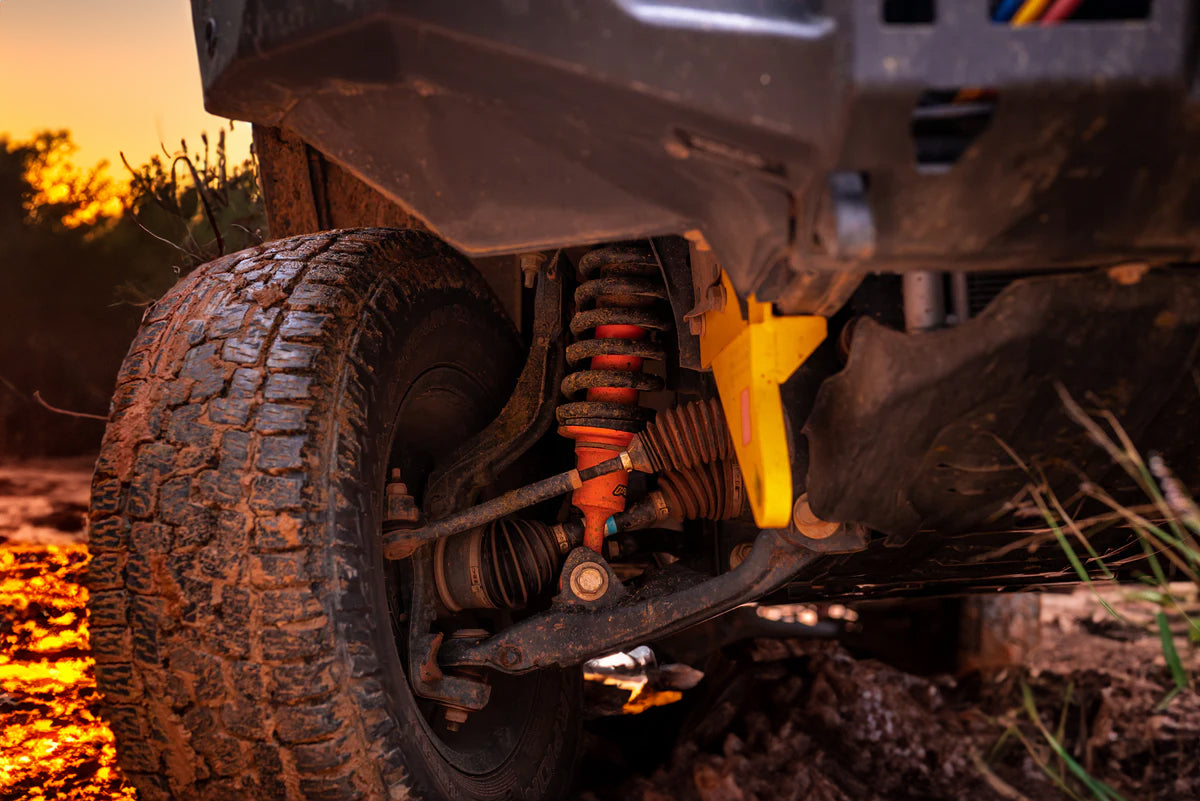
A SUSPENSION SYSTEM DESIGNED FOR TOWING
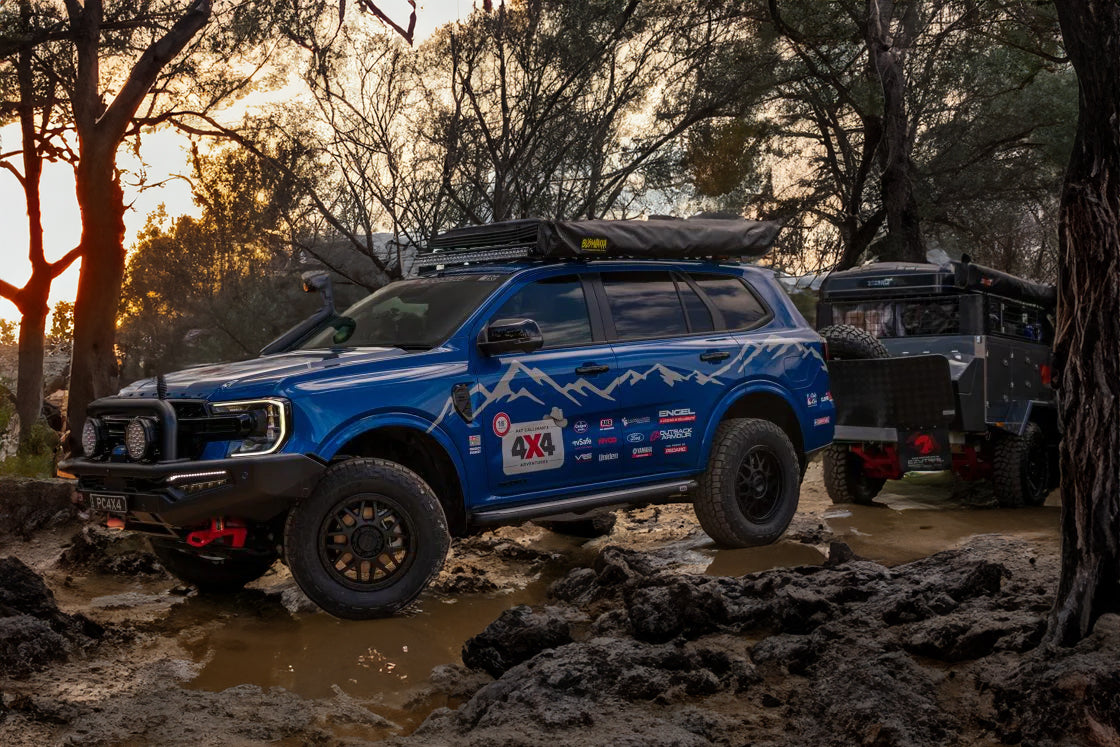
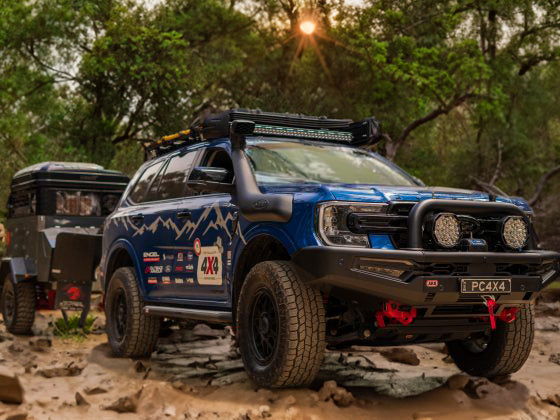
If you’ve attached a caravan to the rear of your vehicle, it’s likely that you’ll be venturing off-road in search of the ideal camping spot rather than simply engaging in leisurely driving. In such situations, a reliable suspension system becomes crucial, capable of tackling the rugged terrain of the Australian Outback regardless of your location.
But why is a suspension system of utmost importance when it comes to towing?
When you acquired your 4WD, it came equipped with a standard factory suspension system specifically designed for smooth and predominantly paved road conditions.
Once you venture beyond smooth, well-paved asphalt roads and immerse yourself in nature’s untamed playground with its bumpy tracks, uneven landscapes, and numerous obstacles like rocks, tree branches, and stumps, your vehicle will experience incessant bouncing, making it incredibly challenging to maintain control.
This challenge amplifies twofold when you introduce a 2-3T caravan to the equation.
The solution lies in acquiring an aftermarket suspension system, which significantly enhances your vehicle’s maneuverability and overall performance. It empowers your vehicle to effortlessly tow a caravan, even when bearing additional weight, ensuring a smoother and more controlled journey.
EVENLY DISTRIBUTE YOUR LOAD IN THE CARAVAN
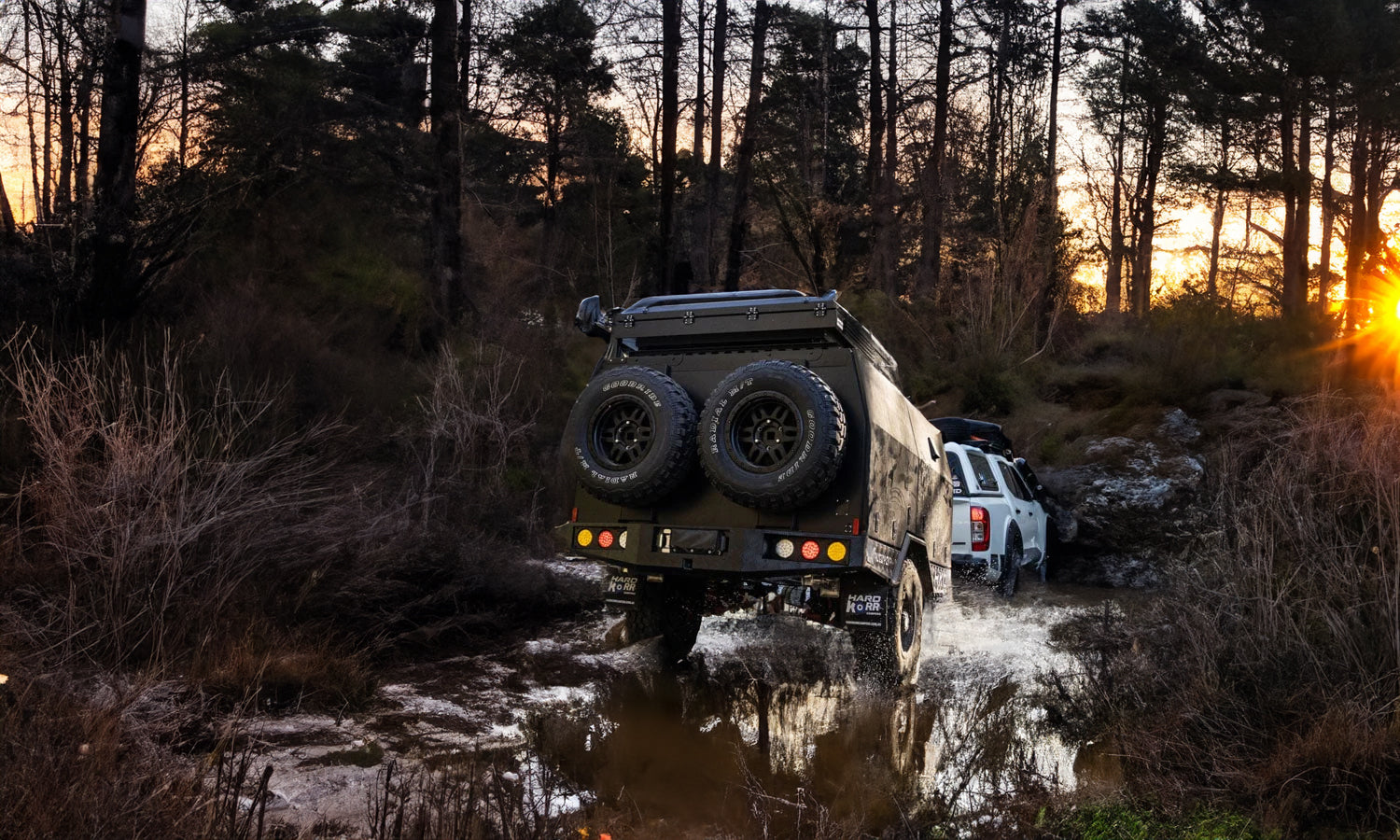
With the abundance of storage space both inside and outside the caravan, it is crucial to exercise caution when determining the storage location for the majority of your heavy equipment.
Placing an excessive amount of gear in the front could potentially overload the vehicle, while an excessive amount at the rear may cause the caravan to fishtail.
According to TAG, the optimal position for storing heavy gear is directly above the caravan’s axle. This area provides the greatest strength and allows for even weight distribution, eliminating the need to meticulously balance the weight between the front and rear sections.
Additionally, it is advisable to pack judiciously and only bring essential items that are indispensable. Moreover, it is recommended to travel with full water tanks before embarking on your journey as this reduces the caravan’s center of gravity and minimizes weight shifts.
UHF COMMUNICATION
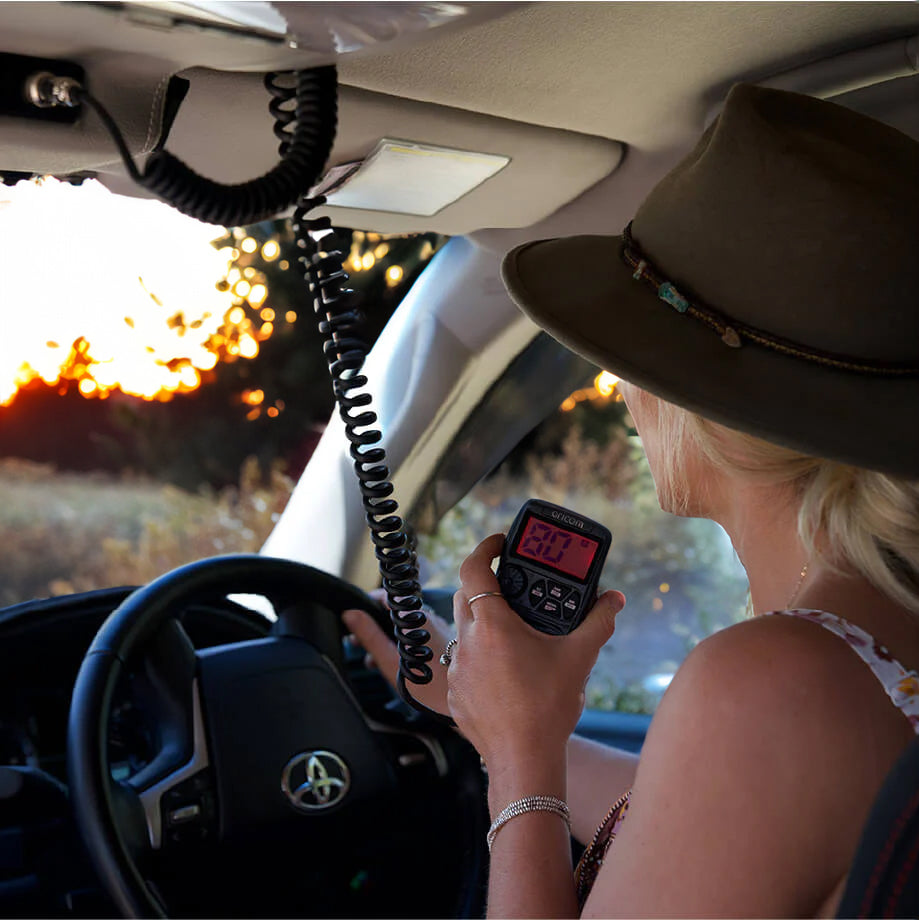
Knowing the path ahead is essential when towing a caravan, and nothing exemplifies this better than the saying, “it pays to know the way ahead.” According to TAG, the most effective method of gaining insight into your travel route is by utilizing a UHF radio.
A UHF radio enables direct communication with fellow road users, allowing you to receive updates on roadworks, potential hazards, and other important information by tuning in to channel 40, which serves as Australia’s primary road safety resource.
Moreover, you can even establish radio contact with a truck ahead of you to determine the opportune moment for overtaking.
These compact devices are invaluable in emergency situations as well. For instance, if your phone runs out of battery or there is no cellular network coverage while you’re caravanning in remote areas, and an unfortunate incident occurs or someone sustains an injury, your UHF radio becomes a crucial tool.
In such circumstances, you can utilize the UHF radio to reach out to emergency personnel or radio-equipped vehicles nearby, seeking assistance such as a jump-start or a tow if you find yourself stranded in the wilderness.
TOWING OFFROAD TIPS:
TOWING ON HILLS
Hill descents are the moments when you’ll appreciate having installed an electric brake controller (which you have done, haven’t you?). The tow vehicle benefits from engine braking, so you might only need a gentle tap on the brakes. On the other hand, the trailer lacks engine braking. However, a slight application of the brakes may not significantly reduce the trailer’s speed. In such cases, it is advisable to enhance the sensitivity of the brake controller. This adjustment ensures that the trailer’s brakes engage earlier in relation to the tow vehicle’s brakes.
When initiating a steep descent, initially, the trailer will slow down the tow vehicle. However, as the trailer reaches the top of the slope, this deceleration will diminish, so it is important to be prepared. As always, when going downhill, leverage the existing tracks in the terrain to your benefit, ensuring that both the trailer and tow vehicle follow the same path. This might require some extra alignment before beginning the descent. In the event of any mishap, the lighter trailer is unlikely to overtake your 4X4. Nonetheless, ensure that the trailer’s tires are appropriately deflated to enhance its braking capability on hills. It is crucial to note that an exception could arise when there are no tracks and the brake bias is adjusted in a way that causes the trailer’s wheels to lock too easily. Therefore, achieving the correct brake bias setting is vital.
Furthermore, as long as the trailer continues to descend, it will exert a pushing force on your 4X4, which can be advantageous in situations where the descent immediately transitions into an ascent.
Hill ascents with a trailer are similar to driving without one, but there are a few differences to consider. The weight distribution changes due to the trailer’s towball mass, resulting in less weight on the front wheels of the tow vehicle. As a result, expect reduced steering control and the possibility of the front wheels lifting. It’s advisable to use a lower gear to accommodate the extra weight of the combined vehicle. Keep in mind that successfully ascending a hill means getting both the vehicle and the trailer over the crest, not just the 4×4.
The main challenge with hills arises if you fail to climb them, especially when driving a trailer off-road. In such a situation, you may need to back the trailer down the hill. However, if it’s at an awkward angle in relation to the tow vehicle, you might find it difficult to move forward or maneuver the trailer effectively.
Unhooking the trailer may not be helpful if the tow vehicle cannot ascend the hill from its current position. In such cases, a common solution is to winch the vehicle forward. Therefore, it’s worth considering this option before attempting a challenging ascent. If moving forward is not feasible, you may need to detach the trailer. But how do you pull it backward? This is where a Tirfor (hand) winch with a plate for the jockey wheel can come in handy. Once the trailer is out of the way, you can focus on the tow vehicle. It’s important to note that this process can be difficult, which is why it’s crucial to approach all hill ascents as potential problems.
TOWING IN MUD
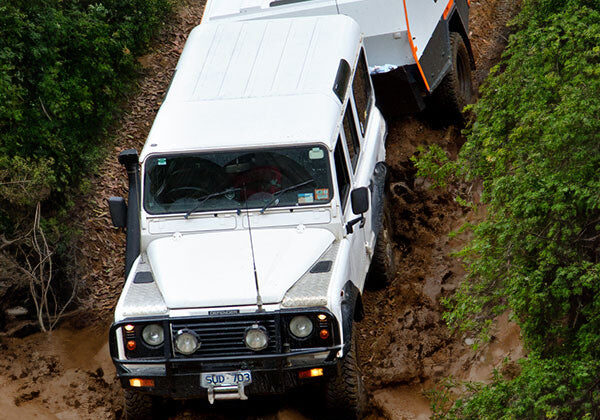
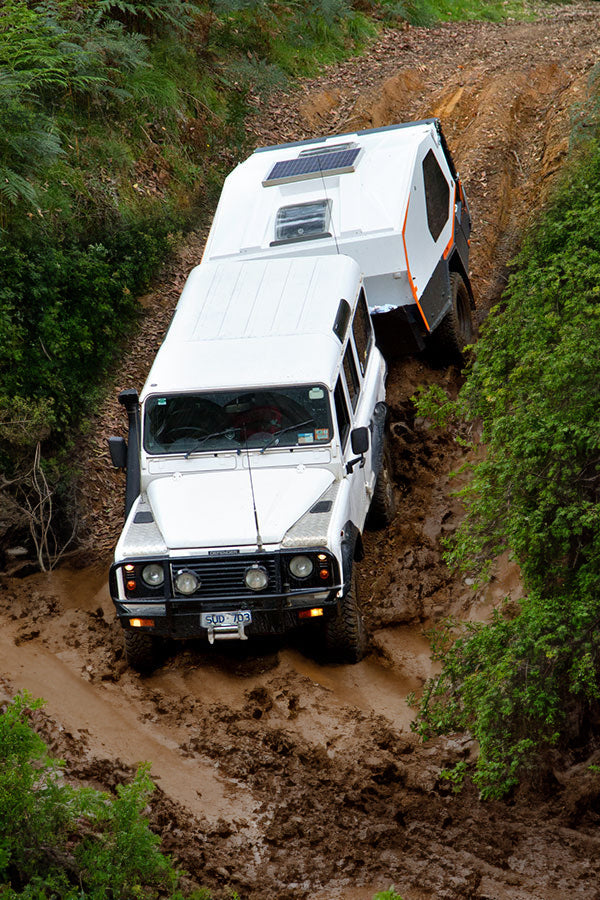
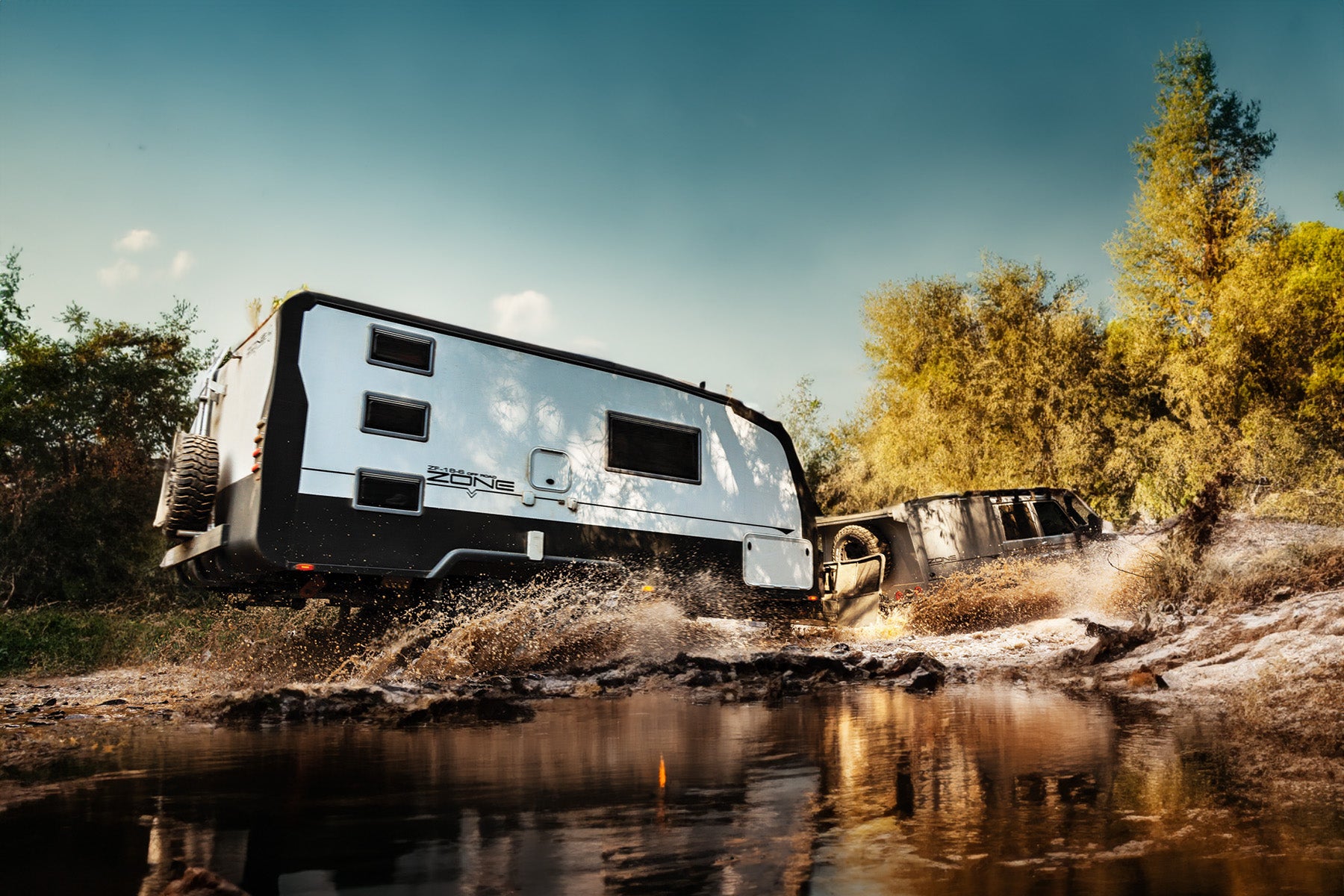
Driving through mud is a simple process, quite literally. The important factor is to reduce resistance, ensuring that the trailer closely tracks the wheels of the 4X4 vehicle. This principle holds true for other soft terrains like snow and sand as well. However, due to the added weight and resistance of the trailer, more momentum or a lower gear may be necessary. It’s advisable to avoid making sharp turns, as it will result in all six wheels creating their own ruts instead of following the same path, leading to increased rolling resistance. Additionally, keep in mind that reversing a trailer in slippery or soft conditions might not be feasible.
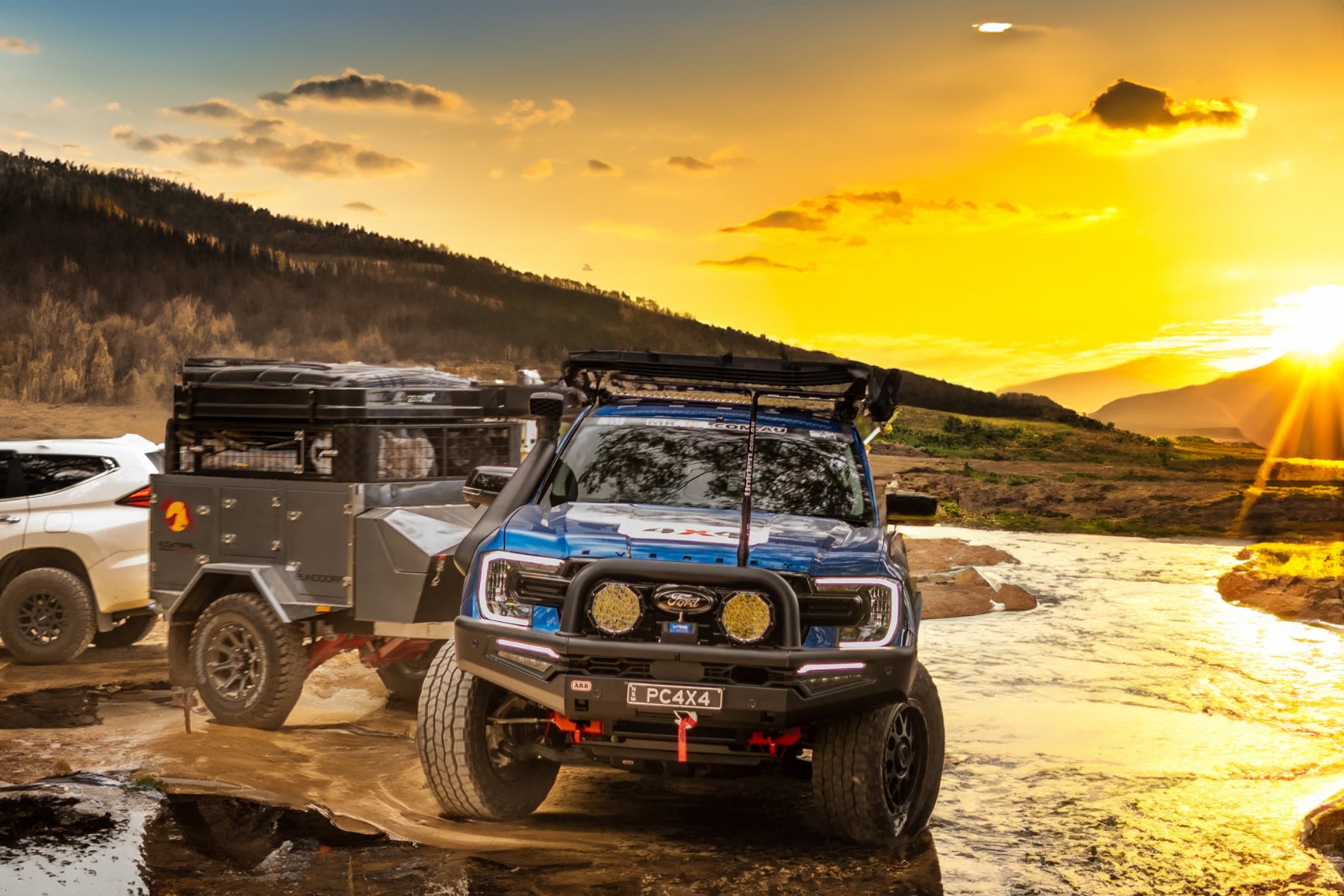
TOWING ACROSS RIVERS
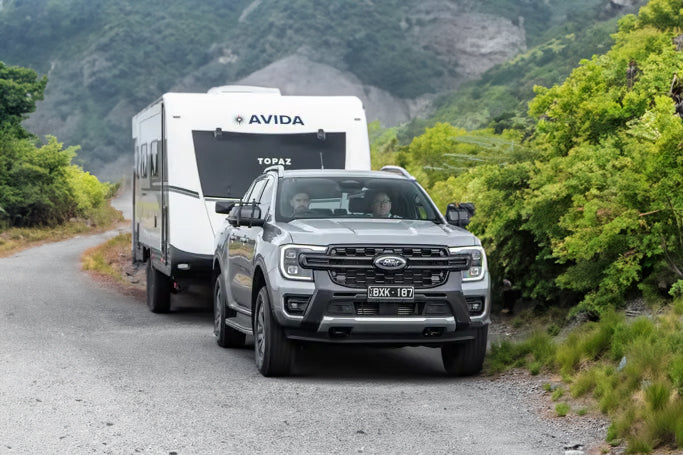
Water crossings necessitate additional torque, even though the tow vehicle primarily pushes water aside from the trailer. Furthermore, any alteration in direction will heighten the resistance experienced by the trailer. Extracting a trailer from deep water through reverse movement proves to be challenging, particularly in the presence of noticeable water current. Any off-road trailer deserving of its name must possess waterproofing capabilities on par with those found in the average 4X4.
TOWING ON SAND
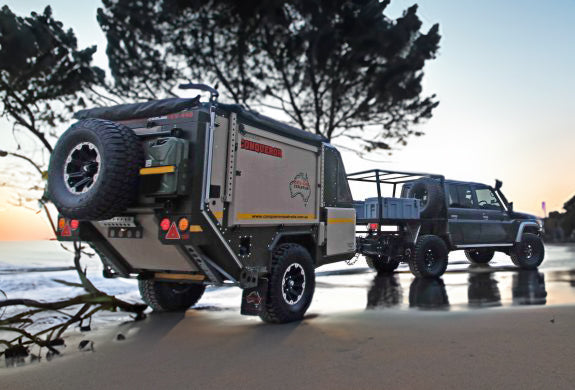
When driving with a trailer on sand, it is important to adjust tire pressures lower than when driving a solo 4×4. The main challenge arises when encountering side slopes, as the trailer applies sideways force to the tow vehicle and the sand may not provide enough lateral traction, resulting in potential sliding down the slope. This problem becomes more severe as the wheels create their own ruts. If this situation occurs, the best solution is to turn downhill and drive out, although this can be problematic if it leads towards a rising tide.
Another significant risk when driving on sand with a trailer is ascending slopes. Firstly, even a slight sideways angle can cause the trailer to pull the back of the 4×4 sideways. Secondly, reversing a trailer down a sandy slope is often extremely difficult due to the lack of lateral traction, increasing the likelihood of jackknifing. Repositioning the tow vehicle by driving uphill in sand is also challenging. Moreover, recoveries in sandy terrain can be troublesome since there are usually no conveniently located trees to serve as winch anchors. Possible solutions include digging, using recovery boards, and relying on assistance from other vehicles.
GENERAL DRIVING
A trailer reduces the maneuverability of a vehicle but does not affect the size of the outside turning circle. A well-designed off-road trailer should still enable you to make a full lock turn. However, what does change is the size of the inside turning circle since the trailer wheels cut inside those of the towing vehicle. To navigate effectively while towing, it is helpful to swing out wide with the tow vehicle and generally requires more proactive thinking and planning compared to driving without a trailer.
Even on the road, backing a trailer at full lock may result in a jackknife, and off-road the chances of this occurring increase. One solution is to reverse your 4X4 slightly at full opposite lock, intentionally jackknifing the trailer to squeeze a little more turning circle. You can also unhook the trailer, while a third option is to use a winch to literally drag the front of the 4X4 around. You can also get creative with intentional skids. For example, manually applying the trailer brakes and then driving the 4X4 may induce enough of a skid or slip to move the 4X4 enough to make it around an obstacle. Alternatively, if you have a part-time 4×4 vehicle, run in 2WD and try a similar technique to move the rear wheels sideways. Always use techniques such as these with a fair degree of caution and, in fact, this advice summarises the entire approach to off-road trailer driving. Having said that, once you master off-road towing techniques you’ll be amazed at where you can drag your trailer.
TIPS & TRICKS YOU NEED TO KNOW
Whether you embark on a cross-country trek with your family or venture alone, equipped with a portable home attached to the rear of your vehicle, the experience is truly incomparable. It grants you the unique opportunity to truly discover the wonders of this vast land, immersing yourself in its diverse landscapes and iconic marvels, all without the need to fret about cutting your journey short, arranging accommodations, or setting up a shelter.
Nevertheless, irrespective of your level of expertise, towing a caravan entails much more complexity than simply connecting it to a standard tow ball and speeding off to your vacation spot. It necessitates a capable 4WD vehicle that is specifically designed to handle all your towing needs and journey requirements. Additionally, a thorough comprehension of the rules, regulations, safety measures, and initial setup procedures related to towing is crucial.
Without any more delay, let’s jump straight into the essential top tips and tricks for towing a caravan. To begin, we start off with a couple of helpful suggestions to make the hitching process nearly effortless.
Reversing your 4×4 to connect your caravan, regardless of your experience level, can prove to be a challenging task, even with guidance. Even a slight misalignment requires repeating the process multiple times until it is safely and correctly connected.
This is where a reverse camera becomes invaluable.
Thankfully, the majority of newer vehicles are equipped with built-in reverse cameras. Some even have additional features like reversing guidelines and sensors that provide precise information about the angle and distance between your 4×4 and the caravan hitch.
However, for older models, there are various permanent and portable solutions available to simplify the reversing process. It is important to note that permanent solutions require professional installation by a licensed automotive accessories specialist.
Reverse cameras contribute significantly to safety, especially when traveling with children in a caravan. They effectively help mitigate risks associated with the pinch point, or crush zone, between the tow ball and drawbar.
Safety is of utmost importance, and it goes without saying that having a clear view of the road ahead is crucial. It is essential to be aware of your surroundings to ensure the safety of your family and the caravan itself. To achieve this, using a towing mirror becomes necessary.
One significant concern is the presence of blind spots, as side mirrors on most vehicles have limited visibility. By using towing mirrors, you can minimize these blind spots and enhance your overall field of vision.
Moreover, towing can be a stressful task, but with the assistance of a towing mirror, it instills a sense of confidence by providing a comprehensive view of what lies behind your vehicle.
Additionally, adhering to legal requirements is essential for both safety and legal purposes. When towing a large trailer, it is mandatory to have the correct towing mirrors in place.
After successfully maneuvering your 4×4 in reverse towards your caravan, it’s time to establish a connection between the two.
Attaching your caravan to your 4×4 is usually a simple task. However, unfavorable weather conditions or a sense of urgency to resume your journey can increase the likelihood of errors or incorrect linkages.
Step 1: Securely attach your hitch and place the cap on top.
Step 2: Cross your chains by connecting the left chain to the right point on your 4WD and the right chain to the left point. This creates a protective cradle or safety net that will catch the hitch if it becomes detached.
Step 3: Connect the electronics for your brake controller and brakelights.
Step 4: Attach the brake safety mechanism.
Step 5: Release the handbrake on your caravan.
Step 6: Remove the jockey wheel.
Step 7: Take away any wheel chocks.
Step 8: Perform a final walk around. Check that all the legs of your caravan are raised, ensure every chock is stored properly, close and secure all windows and storage containers, pack away the awning, and lastly, double-check all your connections before hitting the road
Ensure that if you own a caravan and carry a heavy load, you have properly installed an electronic brake controller on your vehicle. It is now a legal requirement for all caravans and trailers weighing more than 2000kg. However, it is crucial to select a reliable brake controller and familiarize yourself with its operation.
Curious about the function of an electronic brake controller? Essentially, it enables you to engage the brakes on your caravan simultaneously with your 4×4 vehicle. This synchronization ensures that when you apply the brakes to decelerate or prevent a collision, your caravan will slow down at the same rate, providing better control and enhancing overall safety.
The second you press it you should feel your caravan’s brakes activating and force your 4×4 to slow down.
When it comes to towing a caravan, the towbar itself is of utmost importance. It serves as the essential component that enables camping or touring adventures to take place. Therefore, it is crucial to invest in a high-quality towbar.
But how can you identify a good towbar? What factors should you take into account?
Primarily, you must ensure that your towbar is sturdy, dependable, and offers optimal vehicle clearance for off-road usage. Regrettably, a large portion of towbars available in the market fail to fulfill these three requirements, let alone one or two of them.
If you’ve attached a caravan to the rear of your vehicle, it’s likely that you’ll be venturing off-road in search of the ideal camping spot rather than simply engaging in leisurely driving. In such situations, a reliable suspension system becomes crucial, capable of tackling the rugged terrain of the Australian Outback regardless of your location.
But why is a suspension system of utmost importance when it comes to towing?
When you acquired your 4WD, it came equipped with a standard factory suspension system specifically designed for smooth and predominantly paved road conditions.
Once you venture beyond smooth, well-paved asphalt roads and immerse yourself in nature’s untamed playground with its bumpy tracks, uneven landscapes, and numerous obstacles like rocks, tree branches, and stumps, your vehicle will experience incessant bouncing, making it incredibly challenging to maintain control.
This challenge amplifies twofold when you introduce a 2-3T caravan to the equation.
The solution lies in acquiring an aftermarket suspension system, which significantly enhances your vehicle’s maneuverability and overall performance. It empowers your vehicle to effortlessly tow a caravan, even when bearing additional weight, ensuring a smoother and more controlled journey.
With the abundance of storage space both inside and outside the caravan, it is crucial to exercise caution when determining the storage location for the majority of your heavy equipment.
Placing an excessive amount of gear in the front could potentially overload the vehicle, while an excessive amount at the rear may cause the caravan to fishtail.
According to TAG, the optimal position for storing heavy gear is directly above the caravan’s axle. This area provides the greatest strength and allows for even weight distribution, eliminating the need to meticulously balance the weight between the front and rear sections.
Additionally, it is advisable to pack judiciously and only bring essential items that are indispensable. Moreover, it is recommended to travel with full water tanks before embarking on your journey as this reduces the caravan’s center of gravity and minimizes weight shifts.
Knowing the path ahead is essential when towing a caravan, and nothing exemplifies this better than the saying, “it pays to know the way ahead.” According to TAG, the most effective method of gaining insight into your travel route is by utilizing a UHF radio.
A UHF radio enables direct communication with fellow road users, allowing you to receive updates on roadworks, potential hazards, and other important information by tuning in to channel 40, which serves as Australia’s primary road safety resource.
Moreover, you can even establish radio contact with a truck ahead of you to determine the opportune moment for overtaking.
These compact devices are invaluable in emergency situations as well. For instance, if your phone runs out of battery or there is no cellular network coverage while you’re caravanning in remote areas, and an unfortunate incident occurs or someone sustains an injury, your UHF radio becomes a crucial tool.
In such circumstances, you can utilize the UHF radio to reach out to emergency personnel or radio-equipped vehicles nearby, seeking assistance such as a jump-start or a tow if you find yourself stranded in the wilderness.
Hill descents are the moments when you’ll appreciate having installed an electric brake controller (which you have done, haven’t you?). The tow vehicle benefits from engine braking, so you might only need a gentle tap on the brakes. On the other hand, the trailer lacks engine braking. However, a slight application of the brakes may not significantly reduce the trailer’s speed. In such cases, it is advisable to enhance the sensitivity of the brake controller. This adjustment ensures that the trailer’s brakes engage earlier in relation to the tow vehicle’s brakes.
When initiating a steep descent, initially, the trailer will slow down the tow vehicle. However, as the trailer reaches the top of the slope, this deceleration will diminish, so it is important to be prepared. As always, when going downhill, leverage the existing tracks in the terrain to your benefit, ensuring that both the trailer and tow vehicle follow the same path. This might require some extra alignment before beginning the descent. In the event of any mishap, the lighter trailer is unlikely to overtake your 4X4. Nonetheless, ensure that the trailer’s tires are appropriately deflated to enhance its braking capability on hills. It is crucial to note that an exception could arise when there are no tracks and the brake bias is adjusted in a way that causes the trailer’s wheels to lock too easily. Therefore, achieving the correct brake bias setting is vital.
Furthermore, as long as the trailer continues to descend, it will exert a pushing force on your 4X4, which can be advantageous in situations where the descent immediately transitions into an ascent.
Hill ascents with a trailer are similar to driving without one, but there are a few differences to consider. The weight distribution changes due to the trailer’s towball mass, resulting in less weight on the front wheels of the tow vehicle. As a result, expect reduced steering control and the possibility of the front wheels lifting. It’s advisable to use a lower gear to accommodate the extra weight of the combined vehicle. Keep in mind that successfully ascending a hill means getting both the vehicle and the trailer over the crest, not just the 4×4.
The main challenge with hills arises if you fail to climb them, especially when driving a trailer off-road. In such a situation, you may need to back the trailer down the hill. However, if it’s at an awkward angle in relation to the tow vehicle, you might find it difficult to move forward or maneuver the trailer effectively.
Unhooking the trailer may not be helpful if the tow vehicle cannot ascend the hill from its current position. In such cases, a common solution is to winch the vehicle forward. Therefore, it’s worth considering this option before attempting a challenging ascent. If moving forward is not feasible, you may need to detach the trailer. But how do you pull it backward? This is where a Tirfor (hand) winch with a plate for the jockey wheel can come in handy. Once the trailer is out of the way, you can focus on the tow vehicle. It’s important to note that this process can be difficult, which is why it’s crucial to approach all hill ascents as potential problems.
When driving with a trailer on sand, it is important to adjust tire pressures lower than when driving a solo 4×4. The main challenge arises when encountering side slopes, as the trailer applies sideways force to the tow vehicle and the sand may not provide enough lateral traction, resulting in potential sliding down the slope. This problem becomes more severe as the wheels create their own ruts. If this situation occurs, the best solution is to turn downhill and drive out, although this can be problematic if it leads towards a rising tide.
Another significant risk when driving on sand with a trailer is ascending slopes. Firstly, even a slight sideways angle can cause the trailer to pull the back of the 4×4 sideways. Secondly, reversing a trailer down a sandy slope is often extremely difficult due to the lack of lateral traction, increasing the likelihood of jackknifing. Repositioning the tow vehicle by driving uphill in sand is also challenging. Moreover, recoveries in sandy terrain can be troublesome since there are usually no conveniently located trees to serve as winch anchors. Possible solutions include digging, using recovery boards, and relying on assistance from other vehicles.
A trailer reduces the maneuverability of a vehicle but does not affect the size of the outside turning circle. A well-designed off-road trailer should still enable you to make a full lock turn. However, what does change is the size of the inside turning circle since the trailer wheels cut inside those of the towing vehicle. To navigate effectively while towing, it is helpful to swing out wide with the tow vehicle and generally requires more proactive thinking and planning compared to driving without a trailer.
Even on the road, backing a trailer at full lock may result in a jackknife, and off-road the chances of this occurring increase. One solution is to reverse your 4X4 slightly at full opposite lock, intentionally jackknifing the trailer to squeeze a little more turning circle. You can also unhook the trailer, while a third option is to use a winch to literally drag the front of the 4X4 around. You can also get creative with intentional skids. For example, manually applying the trailer brakes and then driving the 4X4 may induce enough of a skid or slip to move the 4X4 enough to make it around an obstacle. Alternatively, if you have a part-time 4×4 vehicle, run in 2WD and try a similar technique to move the rear wheels sideways. Always use techniques such as these with a fair degree of caution and, in fact, this advice summarises the entire approach to off-road trailer driving. Having said that, once you master off-road towing techniques you’ll be amazed at where you can drag your trailer.




OUR LATEST BLOGS

Ryco Filters
Before we delve into the benefits of RYCO air filters, let’s first understand why air filters are essential for your 4×4 vehicle. The primary function of an…
Bendix Brakes Guide
The answer’s in the name. While OEM brakes are sufficient for normal usage, they become less reliable as more and more weight is added. The closer your vehic…
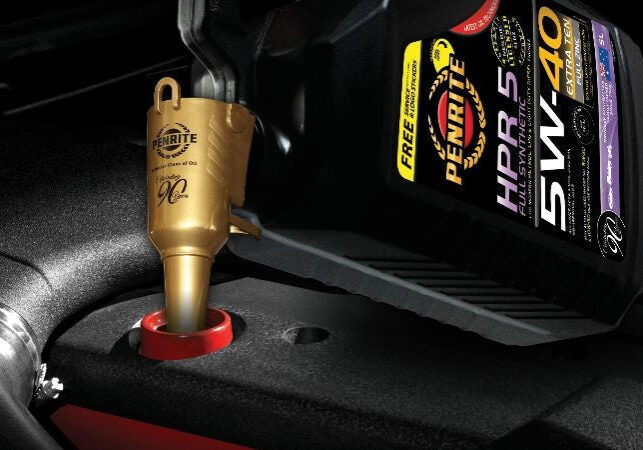
Penrite Oil
Penrite has a long history of involvement in Australia motorsport, covering automotive, motorcycle, kart and boat racing. It’s involvement with Australia’s m…
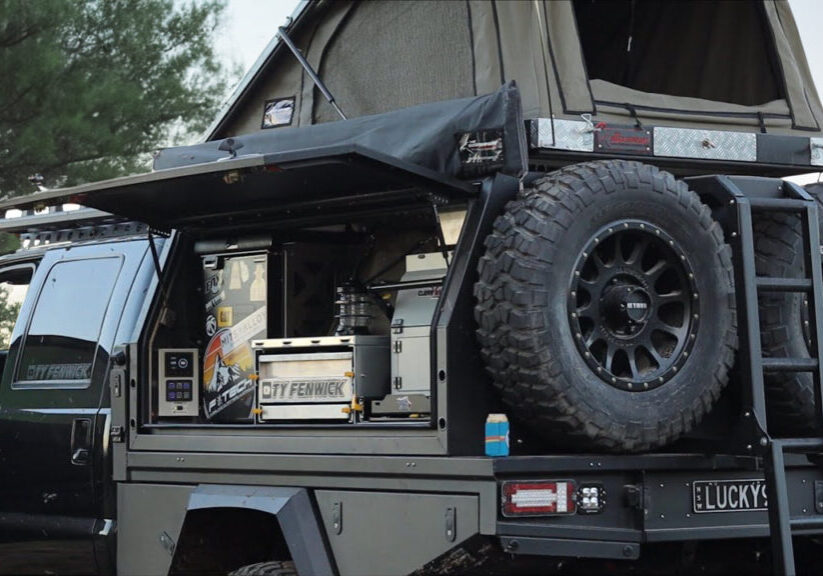
How to Maximise Your 4WD Storage Space
Knowing the vehicle’s roof-load limit and the carrying capacity of the roof rack system is crucial when packing gear onto a roof rack.